
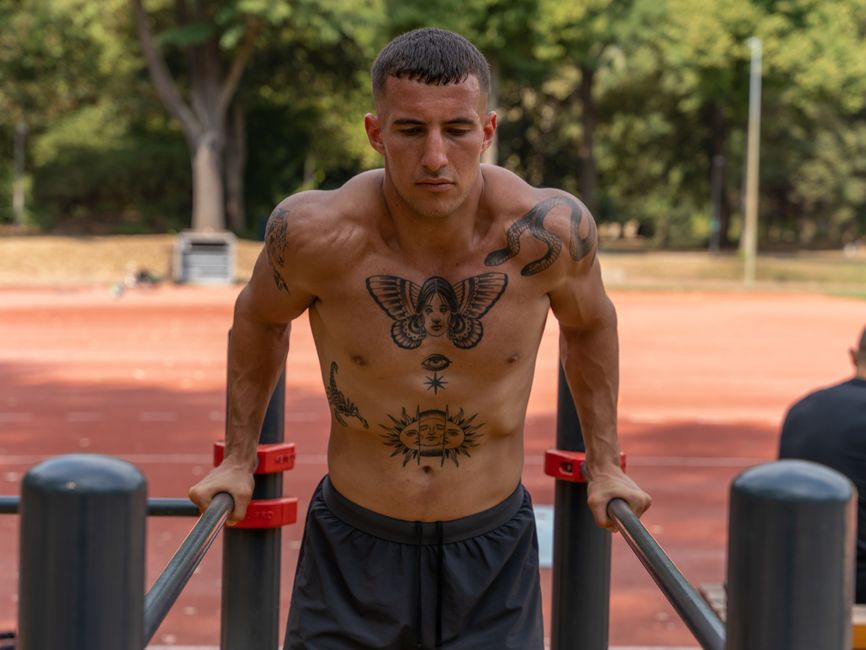
Bodyweight strength training—commonly known as calisthenics—has experienced a massive resurgence in popularity. By leveraging leverage physics, body position variations, and progressive bodyweight resistance, calisthenics builds impressive upper body muscular hypertrophy, shoulder joint stability, core compression strength, and raw relative strength without requiring commercial gym machinery. However, mastering advanced bodyweight movements—such as strict pull-ups, ring dips, handstand push-ups, muscle-ups, and planches—requires structured skill progressions and volume management. In 2026, specialized calisthenics applications guide lifters from fundamental push-ups to advanced gymnastics strength feats.
1. Thenx — Best for Skill Progressions & Advanced Calisthenics
Overview & Methodology: Founded by calisthenics expert Chris Heria, Thenx is designed to guide athletes through step-by-step skill progressions for iconic bodyweight movements.
Key Features: Offers detailed video technique tutorials breaking down the exact progression steps for muscle-ups, handstands, front levers, and pistol squats. Workouts combine bodyweight skill practice with high-intensity conditioning circuits.
Ideal Audience: Intermediate to advanced athletes looking to master gymnastics strength skills and build an aesthetic upper body.
2. Fitbod — Best for Hybrid Calisthenics & Weighted Bodyweight Progressions
Overview & Methodology: Fitbod utilizes an adaptive AI training algorithm that generates personalized bodyweight and weighted calisthenics workouts based on your available equipment.
Key Features: Automatically manages progressive overload by adjusting set, rep, and tempo prescriptions. Supports weighted bodyweight exercises (such as weighted pull-ups and weighted dips) alongside standard bodyweight variations, tracking muscle group recovery percentages in real time.
Ideal Audience: Lifters who want automated workout generation and progressive overload tracking for home or gym bodyweight training.
3. Caliber — Best Science-Based Free Strength & Calisthenics App
Overview & Methodology: Caliber is a science-backed strength tracking application built around proven exercise physiology principles, offering a completely free tier with zero ads.
Key Features: Features structured strength programs emphasizing progressive overload in foundational upper body pushes (push-ups, pike push-ups, dips) and pulls (chin-ups, inverted rows). Includes detailed movement guides explaining correct shoulder blade retraction and elbow position.
Ideal Audience: Lifters who want a clean, science-based strength logging app without subscription paywalls.
4. Calisteniapp — Best Structured Calisthenics Routine Generator
Overview & Methodology: Calisteniapp is dedicated exclusively to calisthenics and street workout conditioning, featuring hundreds of free and premium routine templates.
Key Features: Includes specialized “Smart Workouts” that adapt rep requirements based on your performance, alongside dedicated skill trees for muscle-ups, handstands, and core compression.
Ideal Audience: Pure calisthenics enthusiasts seeking a dedicated bodyweight workout community and routine planner.
Upper Body & Calisthenics App Comparison Matrix
| App Name | Core Workout Style | Skill Progression Guides | Weighted Calisthenics? | Price Model |
|---|---|---|---|---|
| Thenx | Skill Progressions & HIIT Circuits| Step-by-Step Skill Progression Trees| Limited | Free Base / $14.99/mo Premium | ||
| Fitbod | Adaptive AI Strength & Bodyweight | Automated Set/Rep Adaptations | Yes (Full Weighted Support)| $12.99/mo or $79.99/yr | |
| Caliber | Science-Based Progressive Strength | Detailed Technique Video Guides | Yes (Full Weighted Support)| 100% Free Base Tier | |
| Calisteniapp | Pure Calisthenics & Street Workout| Dedicated Calisthenics Skill Trees| Yes (Bodyweight Focus) | Free Base / $4.99/mo Pro |
Key Upper Body Movement Patterns for Calisthenics Success
Building a balanced upper body using calisthenics requires balancing four fundamental movement vectors:
1. Horizontal Push: Push-up variations, ring push-ups, and planche leans (targets chest, anterior deltoids, triceps).
2. Horizontal Pull: Inverted bodyweight rows and archer rows (targets mid-back, rhomboids, rear deltoids).
3. Vertical Push: Pike push-ups, handstand push-up progressions, and dips (targets shoulders and triceps).
4. Vertical Pull: Pull-ups, chin-ups, and muscle-up transitions (targets latissimus dorsi, biceps, and grip strength).
Concluding Recommendation
If your primary goal is mastering gymnastics skills like muscle-ups and handstands, choose Thenx. For a science-backed, progressive strength logging app that is completely free, download Caliber.
Managing Joint Loading and Connective Tissue Adaptation in Calisthenics
Unlike weightlifting machines that isolate individual muscle groups along fixed motion tracks, bodyweight calisthenics requires whole-body joint stabilization and significant tendon strength.
Tendon vs Muscle Adaptation Timelines. Skeletal muscle tissue possesses high vascularity and adapts quickly to physical stress (showing strength gains within 2 to 4 weeks). Connective tissue (tendons, ligaments, and articular cartilage) has significantly lower blood flow and requires 8 to 12 weeks to adapt to structural loads. Pushing advanced calisthenics moves (such as strict dips or muscle-ups) too rapidly can lead to elbow tendonitis (golfer’s/tennis elbow) or shoulder impingement.
Progressive De-loading Protocols. Programs structured inside apps like Caliber and Fitbod incorporate periodic “de-load” weeks every 4 to 6 weeks, reducing workout volume by 40% to allow connective tissues and the central nervous system to repair fully.
Maximizing Calisthenics Hypertrophy Through Mechanical Tension and Time Under Tension
Building muscle size with bodyweight training requires maximizing mechanical tension across target muscle groups. Utilizing tempo variations (e.g., taking 3 seconds to lower down during a push-up) increases time under tension, stimulating muscle hypertrophy without requiring external iron weights.
Mastering Bodyweight Progressive Overload Techniques
Progressing in bodyweight calisthenics without iron weights requires manipulating mechanical leverage and range of motion.
Levers and Biomechanical Disadvantages. To make a bodyweight exercise more challenging without adding weight, alter body leverage. For example, moving from a knee push-up to a standard push-up, declination push-up, archer push-up, or single-arm push-up increases the percentage of total body weight supported by the upper body pressing muscles.
Grip Variations and Joint Health. Utilizing gymnastics rings for upper body calisthenics (pull-ups, dips, push-ups) allows joints to rotate naturally during movement, reducing elbow and shoulder stress compared to rigid fixed bars.
Summary Guidelines for Calisthenics Mastery
To build upper body strength and master gymnastics skills safely:
1. Follow Structured Skill Trees: Use apps like Thenx or Calisteniapp to master fundamental push-ups and inverted rows before attempting muscle-ups or handstands.
2. Track Strength Progression Consistently: Log sets, reps, and exercise variations in apps like Caliber or Fitbod to ensure progressive overload.
3. Protect Connective Joints: Allow connective tendons time to adapt by incorporating periodic de-load weeks and prioritizing proper movement form.
The Importance of Mobility and Recovery Work in Calisthenics
Achieving high-level bodyweight feats requires combining upper body pushing and pulling strength with thoracic spine and shoulder girdle mobility. Dedicating 10 minutes to shoulder dislocates, wrist mobility drills, and chest opening stretches before calisthenics sessions improves movement efficiency and protects shoulder joint integrity.
Mastering progressive bodyweight calisthenics builds an aesthetic, functional upper body while developing joint resilience and relative physical strength.
Combining Calisthenics With Cardiovascular Conditioning
Integrating bodyweight strength sessions with cardiovascular endurance training—such as brisk walking or cycling—establishes a balanced physical conditioning foundation that promotes metabolic health, muscular hypertrophy, and functional athleticism.
Building relative bodyweight strength through progressive calisthenics fosters lifelong physical health and athletic capability.
Progressive bodyweight training provides an effective, highly adaptable framework for building upper body strength without equipment.
Our pick: Thenx (Skill Progressions) or Caliber (Free Science-Based Strength)